We recently completed a dryer vent installation where the existing setup was a 20-foot run of white vinyl hose — and it was a serious safety concern.
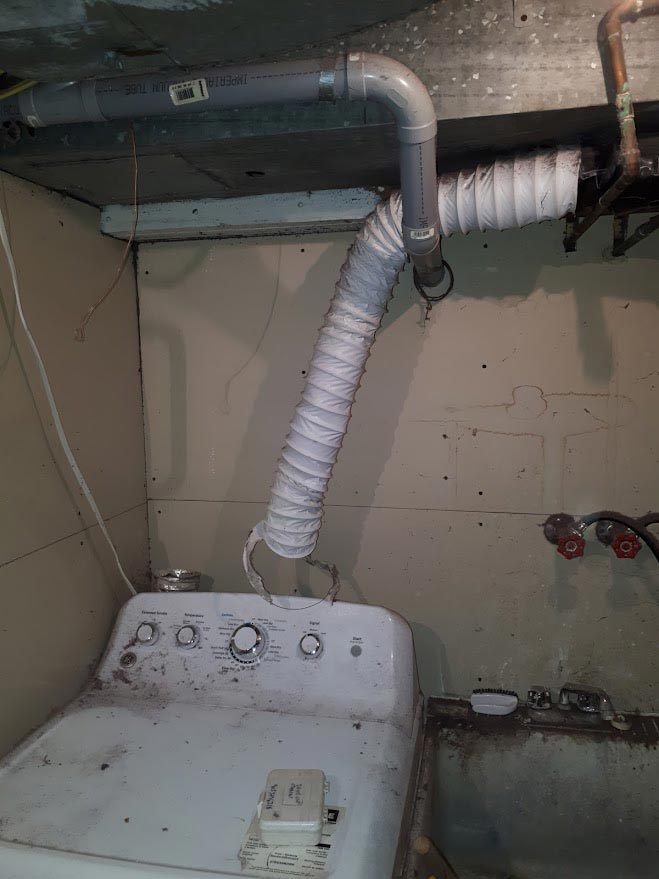
replace vinyl dryer vent hose for metal
The vinyl duct was torn in multiple areas, sagging, and packed with lint. Years of trapped lint combined with restricted airflow had turned this dryer vent into what we often call a dryer fire waiting to happen. Unfortunately, this type of installation is still far more common than it should be.
Vinyl dryer hoses do not meet modern building or fire code requirements, especially for longer vent runs. They are easily damaged, prone to tearing, and their ribbed interior traps lint instead of allowing it to exit the home efficiently.
Why the Old Vinyl Dryer Vent Was Dangerous
The original vinyl duct created multiple hazards:
-
Severe lint buildup due to deep ridges and sagging sections
-
Restricted airflow, causing longer drying times and overheating
-
Torn and leaking ducting, releasing lint and moist air into surrounding areas
-
Non-code-compliant materials increasing fire risk
-
Excessive vent length with no support, worsening lint accumulation
As lint builds up inside vinyl ducts, it becomes highly combustible. Combined with heat from the dryer, this creates ideal conditions for a dryer fire.
The Proper Fix: Solid Metal Dryer Vent Installation
We removed the entire 20 feet of vinyl hose and replaced it with solid galvanized steel ductwork, installed correctly from the dryer connection to the exterior vent.
The new installation included:
-
Rigid metal ducting for smooth, unrestricted airflow
-
Properly supported sections to prevent sagging
-
Secure connections with no screws protruding into the airflow path
-
A layout designed to minimize resistance and lint accumulation
Galvanized steel ductwork allows lint to move through the system efficiently instead of sticking to the walls of the vent. This dramatically improves dryer performance and reduces long-term maintenance and fire risk.
Improved Safety, Efficiency, and Dryer Performance
After the installation was complete, we tested the system to confirm proper airflow. The improvement was immediate.
With the vinyl hose removed and replaced with solid metal ductwork:
-
Drying times were reduced
-
The dryer was no longer overheating
-
Airflow was strong and consistent
-
Fire risk was significantly reduced
This is a perfect example of how a dryer problem is often not the dryer itself, but the vent system connected to it.
Don’t Ignore Vinyl Dryer Vents
If your dryer vent uses white vinyl or foil ducting — especially over longer distances — it should be replaced. These materials deteriorate over time, trap lint, and pose a serious fire hazard.
At DryerVentInstallation.ca, we specialize in correcting unsafe dryer vent installations using code-approved metal ductwork, efficient layouts, and airflow testing to ensure the system is safe and performing as it should.
Replacing a dangerous vinyl dryer vent isn’t just an upgrade — it’s a critical safety improvement.
See the before and after video below